Key Takeaway
Hard water leaves scale inside dish machines, water heaters, steamers, ice machines, and espresso boilers. That means more service calls, more chemicals, and shorter equipment life.
Why it matters: Every heating cycle adds more scale, and you usually notice only after it’s costing you money.
The benefit for you: If you treat commercial water softening in Houston as equipment protection, you can cut emergency repairs and get more years out of your equipment.
Spotty glasses that need hand-polishing during a dinner rush. A dish machine that clogs again months after deliming. If that sounds familiar, hard water is probably the cause, and commercial water softening in Houston is one of the most practical ways to deal with it.
Water passes through almost every machine in your kitchen and front of house, and the minerals it carries end up inside them. Below we cover what hard water does to restaurant equipment, where softening helps most, where you need a different kind of treatment, and how to tell what your building needs.
Quick Facts
What Does Hard Water Do to Restaurant Equipment?
Short answer: it leaves mineral scale behind wherever water is heated or evaporates, and that scale cuts efficiency and wears out parts.
When hard water is heated, calcium comes out of solution as calcium carbonate, the chalky crust you see on faucets. In a restaurant running equipment 12 or more hours a day, it adds up fast. Here’s where operators usually see it first:
- Dish machines: Scale on heating elements, wash arms, and rinse nozzles cuts cleaning performance. Hard water also works against detergent, so many kitchens end up using more chemicals to get the same result.
- Glassware: Cloudy film and water spots mean more rewashing and hand-polishing, which costs labor every shift.
- Water heaters and boosters: Scale on heating surfaces acts as insulation, so the unit works harder to reach temperature.
- Combi ovens and steamers: These run on steam, which leaves minerals behind in the generator and lines.
- Faucets, sprayers, and valves: Buildup slows flow and wears out seals and solenoids sooner.
How Commercial Water Softening Works in Houston Kitchens
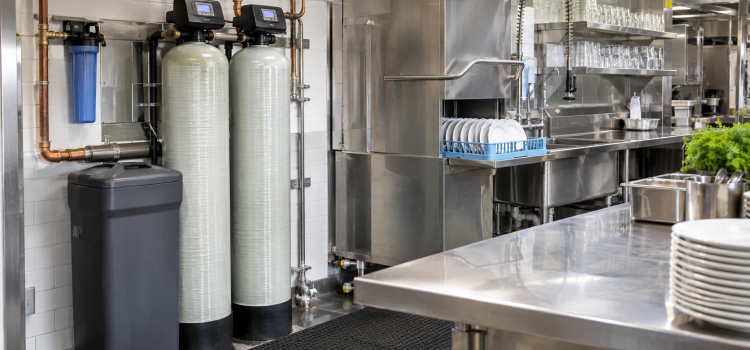
A commercial water softener removes calcium and magnesium before the water reaches your equipment, so the scale never forms.
Most softeners use ion exchange. Water passes through resin beads that trade sodium (or potassium) for calcium and magnesium. When the resin is full, the system regenerates with salt brine and goes back to work.
A commercial water softener has to be sized for your peak flow rate, when the dish machine, prep sinks, and restrooms are all running at once. An undersized system lets hard water slip through when demand is highest.
Important Distinction: Softening vs. Filtration
A softener removes hardness minerals. It doesn’t remove chlorine, sediment, or taste and odor problems. Filtration handles those, and many restaurants need both. Our Services page explains how we set up commercial systems for Houston businesses.
Where Softening Helps Most, and Where It Doesn’t
Softened water is a strong fit for hot water lines and dish machines. Ice machines and espresso equipment usually need dedicated filtration instead.
Good fit for softened water: Water heaters, dish machines, glass washers, and general hot water lines. These are the places where heat turns hardness into scale, so removing the minerals up front pays off the most.
Ice machines: Several major ice machine manufacturers say in their installation manuals that softened water isn’t recommended. In very hard water it can produce soft, cloudy cubes that stick together. This is where restaurant water treatment needs to be planned line by line. Ice machines usually do better with dedicated filtration and a scale inhibitor, chosen to match your water test.
Coffee and espresso: Coffee needs some minerals to extract flavor. The Specialty Coffee Association’s brewing water standard targets a moderate calcium hardness, not zero. Fully softened water can also raise sodium. That’s why coffee lines usually get their own filtration designed to protect the boiler while keeping enough minerals for good flavor.
Houston Water Solutions installs and services Pentair filtration for coffee shops and restaurant chains across the Houston area, so we see these differences every day.
Common Mistake to Avoid
Don’t connect an ice machine or espresso machine to softened water without checking the manufacturer’s water requirements. Running equipment outside those specs can affect performance and, in some cases, warranty coverage.
Can a Commercial Water Softener Really Cut Maintenance Costs?
Yes. By preventing scale, a properly sized softener cuts the deliming, part replacements, and emergency calls that hard water causes.
Savings depend on your hardness, water use, and equipment, so be skeptical of anyone who promises a percentage before testing your water. Savings usually show up in a few places:
- Fewer service calls for clogged nozzles, failed heating elements, and stuck valves.
- Less deliming chemical and less downtime for descaling.
- More efficient detergent and rinse aid use in your dish machine.
- Less labor spent rewashing and polishing glassware.
- Longer equipment life, which pushes back big capital purchases.
Pull your service invoices and chemical orders from the past year. If scale-related calls keep showing up, that money is going to a problem you can prevent. Our article on why Houston businesses need commercial water softening covers the financial side in more detail.
Operator Tips: Keep Your System Working for You
- Check the salt level weekly and never let the brine tank run empty.
- Match the regeneration schedule to your actual water use, not a factory default.
- Keep ice machine and coffee filter cartridges on the manufacturer’s replacement schedule.
- Retest your water and schedule a professional inspection at least once a year.
If hard water symptoms come back, our guide to diagnosing and repairing common commercial water softener problems walks through the usual causes.
Houston Water Conditions and Why Local Expertise Matters
Houston’s water isn’t the same everywhere. Public water quality data puts much of the city’s municipal supply in the moderately hard to hard range on the USGS scale, and the number can change with the source water, your utility district, and whether a property is on city water, a MUD, or a well. Two restaurants a few miles apart can need different setups.
That’s why local experience matters. Houston Water Solutions is a Pentair True Blue dealer based in northwest Houston, working with restaurants, coffee shops, and bakeries across the area. You can see past installs in the commercial work section of our Products page. Every commercial project starts with an on-site water analysis, so we can recommend treatment for each line instead of a one-size-fits-all package.
Frequently Asked Questions
Do Houston restaurants need a commercial water softener?
Many do. Much of Houston’s water tests moderately hard to hard, and restaurants heat a lot of water every day. A water test will confirm whether softening makes sense for your equipment.
How does hard water affect a commercial dishwasher?
It leaves scale on heating elements, wash arms, and rinse nozzles, and it works against detergent. The result is spotty glassware, more chemical use, and more frequent deliming.
Should an ice machine use softened water?
Usually not. Several ice machine manufacturers advise against softened water because it can produce soft, cloudy cubes in very hard water conditions. Dedicated ice machine filtration with a scale inhibitor is the more common solution.
Is softened water good for espresso machines?
Not on its own. Coffee needs some minerals for flavor, so coffee lines usually get dedicated filtration that controls scale while keeping enough minerals for good extraction.
How is a commercial water softener sized?
Sizing is based on your water hardness, daily water use, and peak flow rate during your busiest service periods.
How often does a commercial water softener need maintenance?
Check the salt weekly, confirm regeneration settings match your usage, and schedule a professional inspection at least once a year. High-volume kitchens may need more frequent checks.
The Bottom Line
Hard water is one of the most preventable causes of equipment wear in Houston restaurants and cafes. Scale builds up quietly and shows up later as repair bills, extra chemicals, and lost labor.
Commercial water softening in Houston works best as equipment protection. Soften the hot water and dish lines, give ice and coffee equipment their own filtration, and size everything to your actual water and flow.
Not sure what your building needs? Schedule a consultation with Houston Water Solutions. We’ll test your water on-site, review your equipment, and recommend a commercial setup that fits how your kitchen actually runs.
Further Reading & References
- Houston Water Softener Installation & Repair Services
- Our Commercial Work: Water Treatment for Houston Businesses
- Why Businesses Need Commercial Water Treatment in Houston TX
- How to Diagnose and Repair Common Commercial Water Softener Problems
- USGS: Information About Water Hardness in the United States
